Our news
Autism and Nutrition: The first european results revealed
A rich and unprecedented first year of assessment
Nutrition plays a central role in everyone’s health, well-being, and autonomy. But for adults with autism spectrum disorder (ASD), it can become a real challenge. Food selectivity, sensory hypersensitivities, rigid habits, communication difficulties… these are all factors that make mealtimes complex for both the individuals concerned and their families and professionals.
It is in this context that the European project APIA was born, launched in December 2023 for three years. Its objective is clear: to promote inclusion and autonomy for adults with ASD through adapted nutrition, by providing practical tools to caregivers and professionals.
A first year dedicated to assessment
The first stage of the project, conducted from January 2024 to March 2025, made it possible to take an unprecedented stock of the situation at a European scale.
The partners — researchers, health professionals, specialised associations, and nutrition experts — joined forces to combine several approaches:
-
A scientific literature review (43 articles analysed), which led to an international publication in Nutrients
-
Meal observations of 16 autistic adults in Italy and Spain
-
20 qualitative interviews with caregivers and professionals
-
A quantitative survey collecting 168 responses in four countries (France, Belgium, Spain, Italy)
-
An expert consultation using the Delphi method
This mixed methodology brought to light shared insights as well as very concrete needs that are often overlooked.
Food-related challenges and autism: clear links
The results are clear: more than 90% of respondents confirm that sensory characteristics of foods (texture, taste, smell, colour) directly influence problematic eating behaviours. Likewise, more than one in two believes behavioural difficulties regularly interfere with the ability to eat.
These issues translate into:
-
Strong food selectivity and fear of new foods
-
Mealtime tensions within families
-
Diets that are often too high in processed foods and lack variety
-
A real impact on health: obesity, underweight, diabetes, heart disease, digestive or sleep disorders

Significant constraints for caregivers and services
Although families and professionals are aware of these issues, they face many limitations. Nearly 70% of professionals report not having the means to adapt nutrition to the sensory specificities of the people they support. Financial constraints, a lack of specialised training, and the difficulty of implementing personalised diets in care settings are major obstacles.
However, some approaches have shown effectiveness:
-
Gradual and repeated exposure to new foods
-
Positive reinforcement and creating an atmosphere of trust
-
Establishing a calm, consistent, and predictable environment at meals
Training, support, action
Another major finding from this study is that 78% of caregivers and professionals feel insufficiently trained to meet the dietary needs of people with ASD.
The topics considered priorities for future training include:
-
Understanding specific food sensitivities
-
Basic nutrition knowledge
-
Practical strategies for managing meals
-
Tools for analysing eating behaviours
Participants’ recommendations converge on the need to strengthen professional training in nutrition, integrate specialised dietitians into institutions, allocate more resources to services, and promote long-term nutritional education for autistic adults themselves.
Turning research into action
This initial synthesis lays the groundwork for collective work that will continue until 2026. APIA’s ambition now is to turn these results into practical tools and educational materials, so that every meal becomes not a source of tension, but a moment of autonomy, pleasure, and shared well-being.
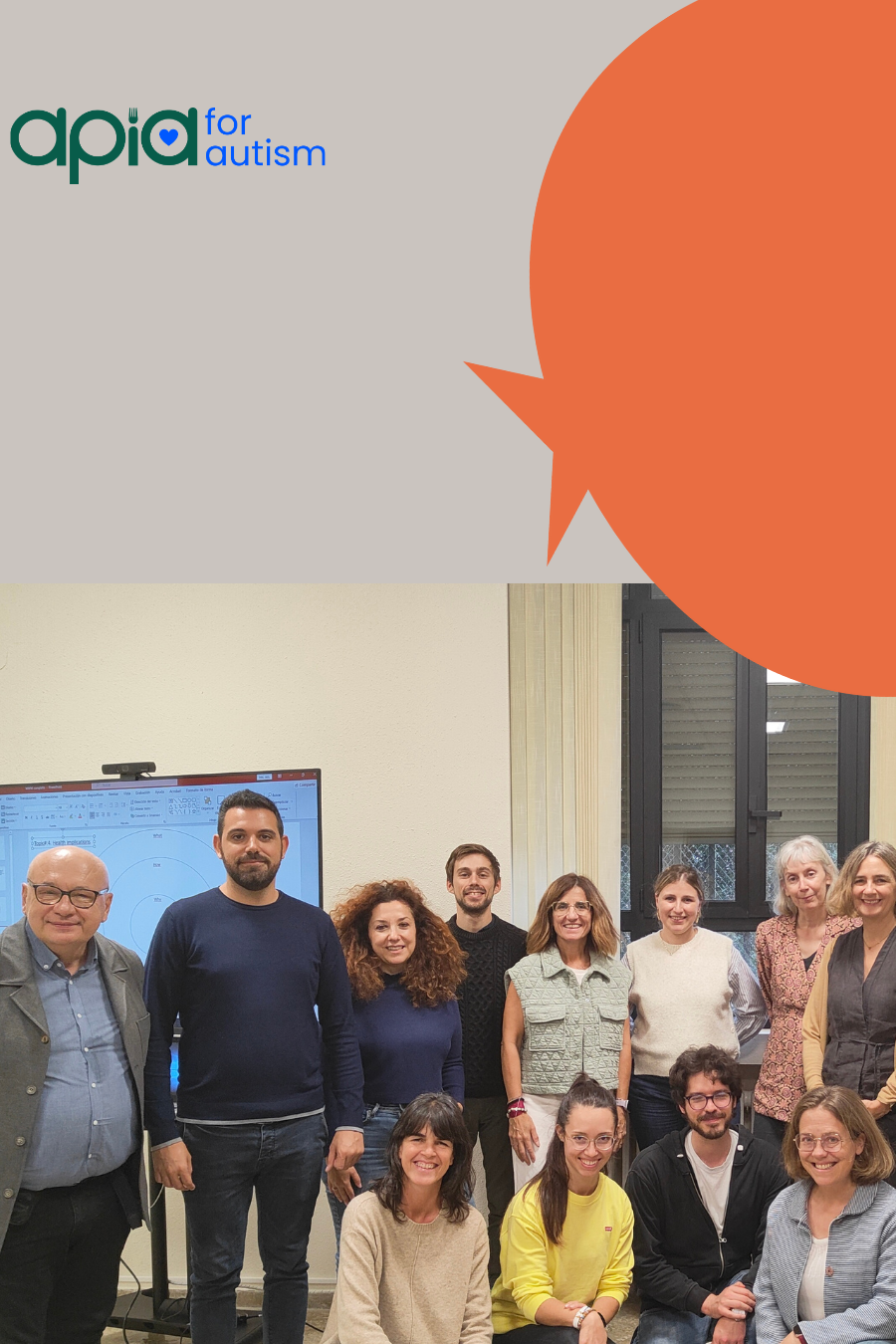
This dynamic was notably strengthened during the 3rd transnational meeting of the project, organised in June in Cagliari (Sardinia). Immersion within the host institution — including a visit to the facility and participation in a cooking workshop — allowed partners to confront theoretical work with real field situations.
These observation and hands-on moments helped refine pedagogical orientations, consolidate ongoing outputs, and lay the foundations for the future methodological guide of the project.
Also worth reading: Training to better nourish and better include – 3rd Transnational meeting
To receive the full survey results: contact@lesinsatiables.org
Plus d’actualités